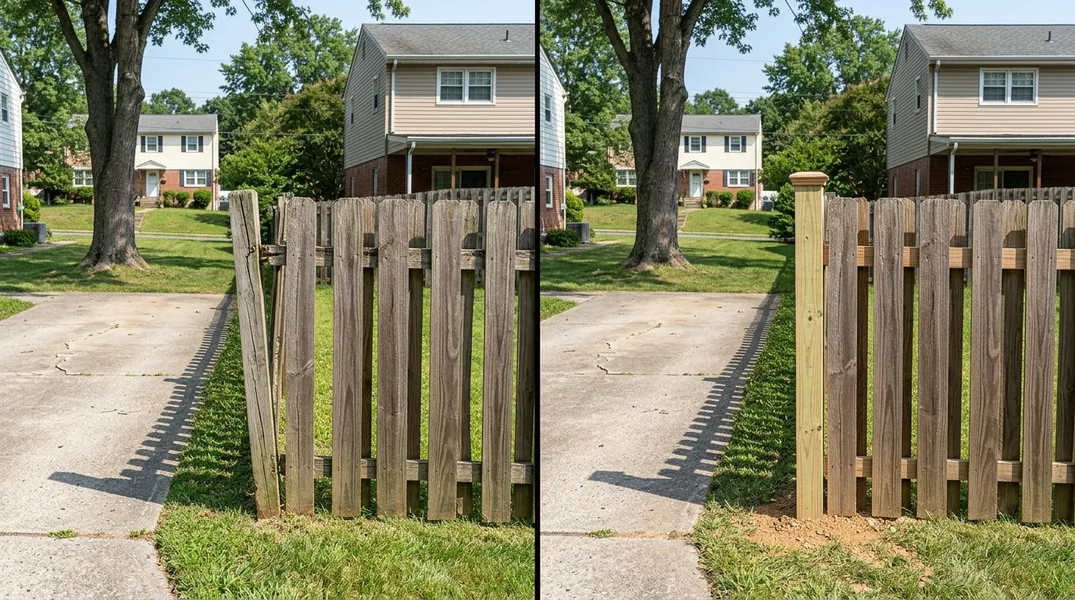
Understanding Fence Heaving in Baltimore's Winter Climate
If you live in Baltimore, Dundalk, or Towson, you've likely noticed something peculiar come spring: fence posts that seem to have shifted, boards that no longer align perfectly, or sections that appear to be tilting. This phenomenon is called fence heaving, and it's one of the most common seasonal challenges homeowners face in the Mid-Atlantic region. Fence heaving occurs when the soil around your fence posts expands and contracts due to repeated freezing and thawing cycles, ultimately pushing posts upward and destabilizing your entire fence structure.
The Baltimore area experiences an average of 20 to 30 freeze-thaw cycles each winter, making our region particularly susceptible to this type of damage. When temperatures drop below freezing, moisture in the soil around your fence posts turns to ice. Ice naturally expands, and as it does, it pushes the post upward. When temperatures rise above freezing during a Nor'easter or mild spell, that ice melts and the soil settles back down, but rarely in exactly the same position. Over the course of a winter season, these repeated cycles can move posts several inches, creating gaps, misalignment, and structural weakness that compromises the integrity of your fence.
The Science Behind Freeze-Thaw Cycles and Soil Expansion
To understand why fence heaving happens so dramatically in Baltimore, it's helpful to know what's happening beneath the ground. When water in soil freezes, it doesn't simply expand in place like ice in a glass. Instead, ice crystals form and grow, pulling additional moisture from surrounding soil particles. This process, called ice lens formation, creates layers of ice within the soil that can be several inches thick. These ice lenses exert tremendous upward pressure on anything resting above them, including your fence posts. The deeper your post is set, the more soil above it can be affected by this expansion, which is why proper post depth is critical for fence longevity.
Nor'easters and winter storms compound this problem by delivering heavy precipitation that saturates the soil around your fence. The more moisture present in the soil, the more ice can form, and the greater the heaving force. Additionally, soil type matters significantly. Clay-heavy soils, common throughout the Baltimore region, are particularly prone to frost heave because clay retains moisture more effectively than sandy or loamy soils. If your property has poor drainage or sits in a low-lying area, you're even more likely to experience severe fence heaving. This is why professional fence installers in Baltimore pay close attention to soil conditions and drainage when planning Wood & Privacy Fence Installation projects.
How Heaving Damages Different Fence Materials
Not all fences respond to heaving in the same way. Wood & Privacy Fence Installation is particularly vulnerable because wood posts can crack, split, or rot when exposed to repeated heaving stress. Once wood begins to deteriorate, water penetration accelerates the damage, and what started as a minor misalignment can quickly become a structural failure requiring post replacement. The boards attached to heaved posts also suffer, developing gaps, warping, or breaking at their attachment points. In severe cases, entire sections of fence may need replacement rather than simple repair.
Vinyl & PVC Fence Installation is more forgiving in some respects because vinyl doesn't rot or splinter, but it can still be compromised by heaving. Vinyl posts may crack or become permanently misaligned, and the rigid panels can warp or separate from their posts. Chain Link Fence Installation typically handles heaving better than rigid materials because the fabric can flex and adjust, but the posts and framework can still shift, creating sagging sections or wobbly gates. Aluminum & Ornamental Iron Fencing resists heaving damage well due to its strength and rigidity, but improper installation or inadequate post depth can still lead to leaning or misalignment over time.
Prevention Strategies: Installation Depth and Drainage Solutions
The best defense against fence heaving is proper installation from the beginning. Professional fence installers in Baltimore know that posts must be set deep enough to anchor below the frost line, which in our region typically extends 32 to 36 inches below the surface. Setting posts at minimum depths or above the frost line is a common mistake that leads to heaving problems. A post set only 18 to 24 inches deep will have insufficient anchoring, and the soil above it will be subject to frost heave forces. Experienced installers also use concrete that extends several inches below grade and is properly sloped away from the post to shed water, preventing moisture accumulation around the post base.
Beyond post depth, drainage management is crucial for minimizing heaving. If your property slopes toward your fence line, consider installing a French drain or grading the landscape to direct water away from the fence. Ensure gutters and downspouts don't discharge water near fence posts. In areas with particularly poor drainage, some homeowners have found success with permeable landscape fabric or gravel trenches along the fence line to improve water movement. If you're concerned about your existing fence or planning a new installation, Baltimore Fence Company can assess your property's drainage and soil conditions to recommend the best approach. Call us at (667) 213-5362 or request a free estimate to discuss your specific situation.
Recognizing and Addressing Heaving Damage Early
Early detection of fence heaving can prevent more extensive damage and repair costs. In spring, walk your fence line and look for posts that appear higher than they did in fall, gaps that have opened between boards, or sections that are visibly tilted. Check for cracks in concrete footings or wood posts, and look for areas where the fence no longer sits flush to the ground. If your gate won't close properly or hangs at an angle, heaving is often the culprit. Don't ignore these signs, as they indicate that the structural integrity of your fence is compromised and will likely worsen with each subsequent freeze-thaw cycle.
If you notice heaving damage, you have several options depending on the severity. Minor shifts that haven't caused structural damage can sometimes be corrected by carefully resetting posts and adjusting boards, though this is delicate work best left to professionals. If posts are cracked, severely tilted, or the concrete footing is damaged, post replacement is usually necessary. The good news is that targeted repairs are often more affordable than full fence replacement. Whether you need minor adjustments or more extensive work, the team at Baltimore Fence Company has the expertise to assess the damage and recommend cost-effective solutions. Reach out at (667) 213-5362 or visit our website for a free estimate.
Planning Your Fence Installation for Long-Term Durability
If you're planning a new fence installation in Towson, Dundalk, or anywhere in the Baltimore area, taking freeze-thaw cycles into account during the planning phase will save you years of headaches. Choose a professional installer who understands our regional climate and soil conditions, and ask specifically about their approach to frost protection and drainage. Discuss your property's slope, soil type, and any existing drainage issues. A reputable installer will use proper post depth, quality concrete, and installation techniques designed to withstand our winters. They'll also help you select fence materials best suited to your climate and maintenance preferences. Whether you're interested in Wood & Privacy Fence Installation, vinyl, chain link, or ornamental options, the right installer will design your fence to last for decades rather than requiring major repairs every few years.
The investment in professional installation and proper materials is significantly less than the cost of repairing or replacing a fence damaged by freeze-thaw cycles. Baltimore Fence Company has served homeowners throughout the region for years, and we understand exactly what it takes to build a fence that will withstand Baltimore winters. Our team uses proven installation methods, quality materials, and attention to site-specific conditions to ensure your fence remains straight, stable, and beautiful for years to come. If you're ready to install a new fence or repair an existing one, contact us today at (667) 213-5362 or request a free estimate to get started.
Looking for a professional fence contractor in Baltimore? Baltimore Fence Company responds fast for all your fence needs.
Get a Free Quote