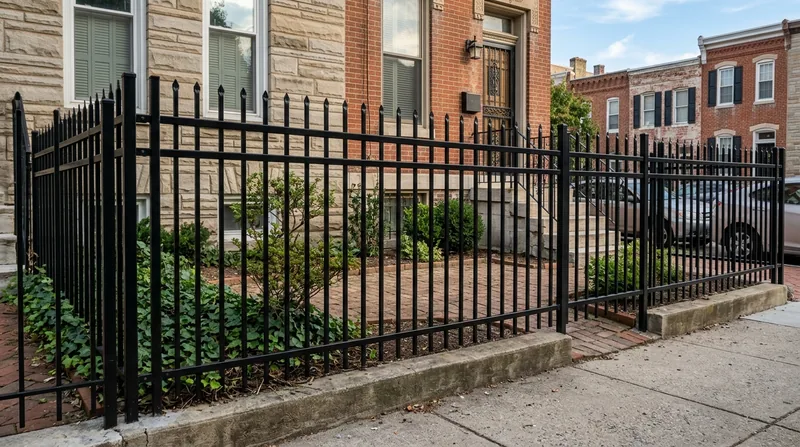




Aluminum fence installation in Baltimore brings clean lines and lasting durability to the rowhouse blocks and tight residential lots that define the city's streetscape. Ornamental iron and aluminum fencing work well where space is tight, posts must fit into narrow clay footings, and sight lines matter on corner properties. These materials hold their finish for decades without the seasonal maintenance that wood demands, and they suit the older architectural character of neighborhoods like Fells Point, Canton, and Federal Hill. Whether you need a decorative front boundary, a secure side yard enclosure, or a gate that anchors your property line, ornamental and aluminum fencing delivers both function and curb appeal. We install these systems to the exact specifications your lot and deed require, working within Baltimore's building codes and HOA architectural standards.
Why Ornamental Iron and Aluminum Fencing Matter on Baltimore Properties
Baltimore's residential character leans toward older, smaller lots where every inch counts. Ornamental iron and aluminum fencing maximize usable space because the pickets and rails take up minimal visual real estate compared to solid privacy materials. These systems also resist rust and weather far better than untreated steel, and they do not require the annual staining, sealing or paint refreshes that wood fencing demands year after year.
- Aluminum and wrought iron pickets remain straight and true even through temperature swings and moisture exposure.
- Posts set in concrete footings stay secure without the seasonal heave that affects shallow tamped installations.
- Ornamental finishes and powder-coated aluminum accept paint and powder-coat touch-ups when minor damage occurs, avoiding full panel replacement.
- Decorative rail and picket designs suit the architectural vocabulary of historic Baltimore neighborhoods.
- These materials do not rot at the ground line, the leading failure mode for wood fence posts in wet clay soils.
Because aluminum and ornamental iron fencing carries a higher upfront cost than chain link or basic wood, the decision to install it is typically anchored in long-term durability and aesthetic value rather than a short-term budget play.
Key info: Baltimore's building department sets fence height limits, setback rules and material restrictions by neighborhood and zoning district. Corner visibility requirements apply to properties at intersections, and HOA architectural guidelines frequently govern material, color and post spacing in master-planned communities. Always confirm local rules before design; visit Maryland's State Department of Assessments and Taxation or your local building department for code details.
How We Install Aluminum and Ornamental Iron Fencing in Baltimore
Our installation process starts with a site walk to verify the fence line, check for utility lines, assess soil conditions, and confirm that the design meets local code and any HOA requirements. We mark the post locations, call for a Maryland 811 utility locate (required by law before any digging), and then set posts in concrete footings spaced to match your design and the local building standard. Rail and picket assembly follows, with all hardware checked for tightness and alignment before we step back.
- We verify the fence line against your existing survey or the boundary you identify, and we confirm all setback and height rules with your local building department.
- Posts are set in concrete footings at depths and spacing that match your design and local frost and soil conditions.
- Rails are attached with rust-resistant fasteners, and pickets are hung plumb and spaced to match your ornamental or aluminum design specification.
- All connections are tightened and checked; any touch-up paint or powder-coat is applied before we leave the job.
- We haul away all debris and leave the site clean.
On a typical run of ornamental iron or aluminum fencing in Baltimore, the entire job from first stake to final inspection takes one to three days depending on the linear footage, soil conditions, and whether gates are included. See our gate installation and repair page for options if your project includes an entry or driveway gate.
Local example: A 40-foot aluminum fence run along a Catonsville side lot with two corner posts and a single walk gate took two days: one day for post setting and utility coordination, one day for rail and picket installation and hardware tightening. The property was in a community with an HOA that required black powder-coat finish and 5-foot height, both of which were specified and confirmed before we ordered materials.
Installation Methods: Aluminum vs. Ornamental Iron and Post-Setting Approaches
| Approach | Description | Best for |
|---|---|---|
| Aluminum picket and rail | Extruded aluminum components with integrated rail channels, powder-coat or anodized finish, no painting required long-term. | Properties where low maintenance and modern clean lines are the priority, and budget allows for higher upfront cost. |
| Wrought iron picket and rail | Forged and welded steel components, typically powder-coated, ornamental designs with scrollwork and decorative finials common. | Historic neighborhoods and properties where architectural character and custom ornamental detail enhance curb appeal. |
| Concrete post footings | Posts set 24 to 36 inches deep in concrete, anchored below frost line, provides maximum stability and longevity in clay and variable soils. | All Baltimore installations; concrete footings prevent heave and rot, standard for both aluminum and ornamental iron systems. |
| Stepped or racked installation | Posts and rails follow slope contours either in stepped fashion (posts level, rails drop in steps) or racked (rails parallel slope). | Sloped lots and uneven terrain; stepped preserves visual line, racked reduces material waste and is faster to install. |
Aluminum systems are faster to install because components are pre-manufactured and require only assembly and fastening. Wrought iron installations may involve on-site welding or custom scrollwork, which adds time and cost but delivers design options aluminum cannot match. Both materials are fully compatible with concrete post footings, the standard in Baltimore.
Aluminum and Ornamental Iron Fencing Cost in Baltimore: What to Expect
Aluminum fence installation in Baltimore typically starts at approximately $48 per linear foot for basic aluminum picket and rail systems with standard spacing and a simple finish. Ornamental wrought iron runs higher, often $65 to $85 per linear foot or more depending on the complexity of scrollwork, custom finials, and powder-coat color. A 100-foot run of aluminum fencing in a Towson or Glen Burnie neighborhood would land in the $4,800 to $5,200 range before gates, permits or site-specific conditions like difficult soil, steep slope or utility conflicts that require extra labor.
Several factors move the final cost up or down. Soil conditions in Baltimore often require deeper footings or rock excavation, which adds labor. Corner posts, gates, and decorative cap rails increase the material count. If your property sits on a slope, a racked or stepped installation takes longer than a level run. Ornamental designs with custom scrollwork, welded joints or special finishes cost more than standard picket profiles. Getting two or three estimates from local installers is always smart, because site-specific conditions (utility conflicts, access, existing fence removal) can shift the price significantly. See our pricing page for a full breakdown by material and service type.
Remember that aluminum and ornamental iron fencing is a long-term investment. The higher upfront cost is offset by decades of service without the seasonal maintenance, repainting, or post replacement that wood fencing requires. When you compare the total cost of ownership over 20 or 30 years, these materials often cost less per year than wood.
Aluminum and Ornamental Iron Fencing Near Me: What Baltimore Homeowners Should Know Before Hiring
Hiring the right fence installer matters because the work is permanent and visible every day. Start by asking any contractor for proof of insurance (general liability and workers' compensation cover) and request a certificate of insurance naming your property. In Maryland, home improvement work including fence installation is regulated through the Maryland Home Improvement Commission (MHIC); ask any contractor for their MHIC number and verify it with the Commission before work begins. Confirm whether your local building department requires a permit for your fence height, material and location, and understand that some HOA communities require architectural approval before installation starts.
- Check references from recent fence installations in your neighborhood or city to verify quality, timeliness and cleanup.
- Request a written estimate that specifies material type, post spacing, rail configuration, finish and any gate or hardware upgrades.
- Confirm that the contractor will call Maryland 811 for a utility locate before digging, as required by law.
- Ask about the warranty on materials and workmanship, and get it in writing.
- Verify that the contractor will pull any required permit and coordinate with your local building department for final inspection.
If your property is in a historic district or a master-planned community, additional architectural review may be required; your installer should be familiar with these processes. Contact us at (667) 213-5362 for a free estimate, and we will walk you through permitting, material choices and timeline before we begin.
Aluminum & Ornamental Iron Fencing in Baltimore: Pricing Guide
| Service | Price | Details |
|---|---|---|
| Aluminum picket and rail fencing | Starting at $48/ft | Standard picket spacing, extruded aluminum components, powder-coat finish, concrete post footings, includes basic hardware and fasteners |
| Ornamental wrought iron fencing | Starting at $65/ft | Custom scrollwork, decorative finials, forged steel components, powder-coat or paint finish, concrete footings, ornamental rail designs increase cost |
| Gates, posts and specialty details | $180 to $450 each | Walk gates, double driveway gates, corner posts, decorative caps, custom welding or scrollwork add to linear foot pricing |
| Stepped or racked installation on slope | Add 15 to 25 percent | Uneven terrain requires stepped posts and rails or racked rail alignment, increases labor time and material complexity |
| Permits and utility locate | Included | Maryland 811 utility locate is required by law; we coordinate with local building department and pull permits where required |
| Free estimate | No obligation | Response within 24 hours at (667) 213-5362, site walk includes material review, code confirmation and budget alignment |
Indicative pricing, the exact cost depends on square footage, finish, and site access. Free personalized estimate within 24h at (667) 213-5362.


