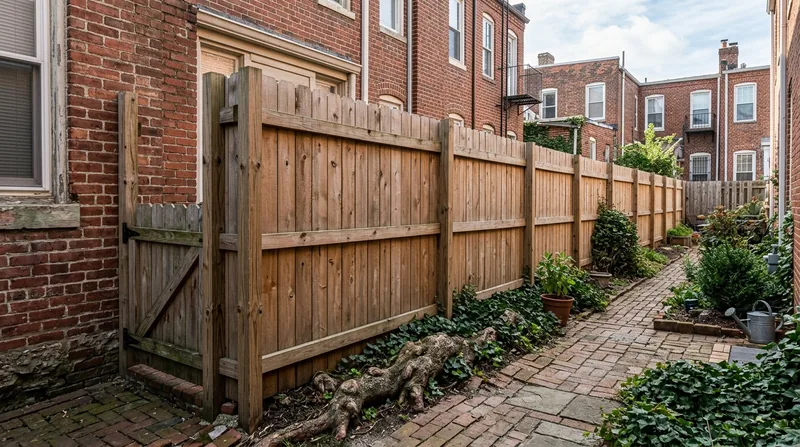




Wood and privacy fence installation in Baltimore is the foundation of residential privacy and property definition across the city's tight rowhouse lots and suburban yards. A well-built wood fence holds the line for decades, blocking sight lines, buffering noise, and marking your property with a material that weathers naturally into the local landscape. We set posts past the frost line, choose lumber that stands up to humid summers and temperature swings, and build to the height and setback rules your neighborhood or HOA requires. Since 2012, we have installed and repaired wood privacy fencing throughout Baltimore and the surrounding counties, working from homeowner surveys and respecting deed restrictions that govern material and design. Whether you need a 6-foot cedar privacy fence, a board-on-board installation, or repair to an existing fence line, we bring the same crew to every job and explain what we find before we start.
Why Wood Privacy Fencing Matters in Baltimore Neighborhoods
Baltimore's residential character depends on clear property boundaries and privacy screens that respect both your space and your neighbor's. Wood fencing is the standard choice because it is affordable, customizable, and integrates into the rowhouse and suburban vernacular. Unlike chain link or vinyl, wood offers true privacy and absorbs sound from busy streets and adjacent yards. A properly installed wood fence also adds resale value and defines outdoor living space in a city where yards are often compact and shared walls are common.
- Wood privacy fencing provides complete sight-line blocking and noise reduction for Baltimore's dense residential areas.
- Cedar and pressure-treated lumber are selected for durability in humid climates and freeze-thaw cycles.
- Posts set in concrete and proper post spacing prevent sagging and leaning over time.
- Board-on-board and side-by-side configurations give you control over privacy level and aesthetic.
- Wood fencing is repairable: individual boards, rails, and posts can be replaced without full removal and reinstallation.
A solid wood fence is an investment in privacy, property value, and neighborhood character that pays back year after year.
Key info: Baltimore's building code sets height limits (typically 6 feet in residential zones, lower in some setback areas) and requires setback from property lines. Some neighborhoods, especially master-planned communities in Towson, Catonsville, and Glen Burnie, have HOA architectural standards that govern fence height, material, and color. Always verify with your city or county building department and your HOA before design and installation begin. More details are available from Baltimore's Department of Planning.
How We Install Wood and Privacy Fencing: The Baltimore Fence Company Process
Every wood fence job starts with a site walk and a clear conversation about your privacy needs, budget, and property line. We locate your existing survey or work from the line you identify, then call Maryland 811 for a free utility locate before we dig any post holes. Posts are set in concrete below the frost line, spaced to code and to the lumber width you choose. We then install rails and pickets, checking for plumb and level as we go, and finish with cap trim if you want it. The whole process takes planning, precision, and lumber that has been acclimated to local humidity before installation.
- Schedule a free site estimate and discuss privacy goals, material preferences, and budget range.
- Confirm property line with your survey or your identification, then request a Maryland 811 utility locate.
- Prepare the fence line by clearing brush and marking post locations to code and spacing.
- Dig post holes to depth below the frost line and set posts in concrete, allowing cure time before installation continues.
- Install stringers (horizontal rails) and attach pickets using galvanized or stainless fasteners to prevent rust and staining.
- Add cap trim and finish work, then inspect the entire line for plumb, level, and alignment before final walkthrough.
This methodical approach means your fence is built to last and built to code.
Local example: A typical backyard privacy fence project in Baltimore (40 linear feet, 6 feet high, cedar pickets on pressure-treated rails and posts) takes 3 to 5 days from post setting to final trim, depending on soil conditions and crew size. In Essex or Dundalk, where yards are often deeper, we may run 60 to 80 linear feet; in rowhouse neighborhoods near Canton or Federal Hill, a side-yard fence might be 20 to 30 feet with tight access. We adjust our crew and equipment to the site.
Wood Fence Installation Methods: Side-by-Side, Board-on-Board, and Cedar Options
The method you choose affects both the look and the cost of your fence. Side-by-side pickets (traditional pickets placed flat and flush) offer good privacy at a lower price point. Board-on-board stacks pickets so they overlap, blocking sight lines from both sides and creating a more finished appearance. Cedar is a premium choice that resists rot and weathers to a natural gray; pressure-treated pine is more affordable and lasts just as long if properly maintained. All methods require the same post and rail foundation, so the choice is really about aesthetics and budget.
| Approach | Description | Best For |
|---|---|---|
| Side-by-Side Pickets | Pickets placed flat and adjacent, mounted to two horizontal stringers; traditional appearance with small gaps between boards. | Budget-conscious homeowners, neighborhoods with traditional aesthetics, areas where full opacity is not critical. |
| Board-on-Board | Pickets overlap on alternating sides of the stringers; blocks sight lines from both directions and creates a finished, modern look. | Maximum privacy, contemporary aesthetics, properties adjacent to busy streets or commercial zones in Baltimore and Catonsville. |
| Cedar Pickets on Pressure-Treated Rails | Premium lumber for pickets; naturally rot-resistant; weathers to silver-gray; higher upfront cost but minimal maintenance over 15+ years. | Long-term value, visible fences in high-end neighborhoods, homeowners who prefer natural wood aging over staining. |
| Pressure-Treated Pine Throughout | Chemically treated softwood resists rot and insects; most affordable option; requires staining every 3 to 5 years to maintain color. | Budget installations, rental properties, fences on secondary property lines or in lower-visibility locations. |
Each approach is sound construction; the choice depends on your privacy goals, aesthetic preference, and maintenance tolerance. If you are uncertain, we can discuss samples and show you examples from recent Baltimore-area projects.
Wood and Privacy Fence Installation Cost in Baltimore: What to Expect
Wood privacy fence installation in Baltimore typically starts at $32 per linear foot for pressure-treated pine with standard side-by-side pickets and basic post and rail construction. That baseline covers material, labor, and proper post setting in concrete. Several factors move the price up: cedar lumber costs more than pressure-treated pine; board-on-board configuration requires more pickets and labor; difficult site access (narrow side yards, slopes, dense vegetation) slows installation; and proximity to utilities or structures may require extra care or rerouting. A typical backyard fence of 40 to 60 linear feet runs $1,280 to $1,920 at the entry price point, but a cedar board-on-board fence on the same property can reach $2,400 to $3,600. Getting 2 to 3 estimates from local installers helps you understand the market and spot outliers. We offer a free, no-obligation estimate within 24 hours; call (667) 213-5362 or visit our pricing page for detailed breakdowns by material and configuration.
The cost of your fence also reflects the durability and repairability you get. A wood fence built to code with posts set in concrete and galvanized fasteners will last 15 to 20 years with minimal maintenance. That long service life and the ability to repair individual boards or sections (rather than replacing the whole fence) make wood a smart value over time.
Wood and Privacy Fence Installation Near Me: What Baltimore Homeowners Should Know Before Hiring
Hiring a fence installer is a straightforward decision if you know what to ask. First, confirm that any contractor you contact carries general liability and workers' compensation insurance; ask for a certificate of insurance naming you as an additional insured. Second, understand that Maryland regulates home improvement work, including fence installation, through the Maryland Home Improvement Commission (MHIC). Ask any contractor for their MHIC registration number and verify it with the Commission before signing a contract. Third, check with your city or county building department to confirm whether a permit is required in your neighborhood; some jurisdictions require one, others do not. Fourth, if you live in an HOA community, obtain written approval of your fence design (height, material, color) before work begins; violations can be costly to remedy. Finally, get multiple estimates and ask for references from recent projects in your area. We have been installing wood and vinyl fencing in Baltimore, Towson, Dundalk, Catonsville, and surrounding communities since 2012, and we are fully insured with a certificate available on request. If you have questions about permits, HOA requirements, or fence design, contact us for a free consultation.
A reputable local installer will answer your questions clearly, show you material samples, and explain exactly what is included in the estimate before any work begins.
Wood & Privacy Fence Installation in Baltimore: Pricing Guide
| Service | Price | Details |
|---|---|---|
| Pressure-Treated Pine, Side-by-Side Pickets | Starting at $32/ft | Standard 6-foot privacy fence with posts set in concrete, galvanized fasteners, and basic cap trim included |
| Cedar Pickets on Pressure-Treated Rails | Starting at $48/ft | Premium rot-resistant lumber; natural weathering; higher upfront cost offset by minimal maintenance over 15 years |
| Board-on-Board Configuration | Starting at $42/ft | Overlapping pickets for maximum privacy and finished appearance; labor and material increase over standard side-by-side |
| Difficult Site Access or Slope Installation | On estimate | Narrow side yards, dense vegetation, racked or stepped installation on uneven terrain require on-site assessment |
| Free Estimate and Consultation | No charge | Response within 24 hours at (667) 213-5362; site visit, material samples, and design discussion included |
Indicative pricing, the exact cost depends on square footage, finish, and site access. Free personalized estimate within 24h at (667) 213-5362.


