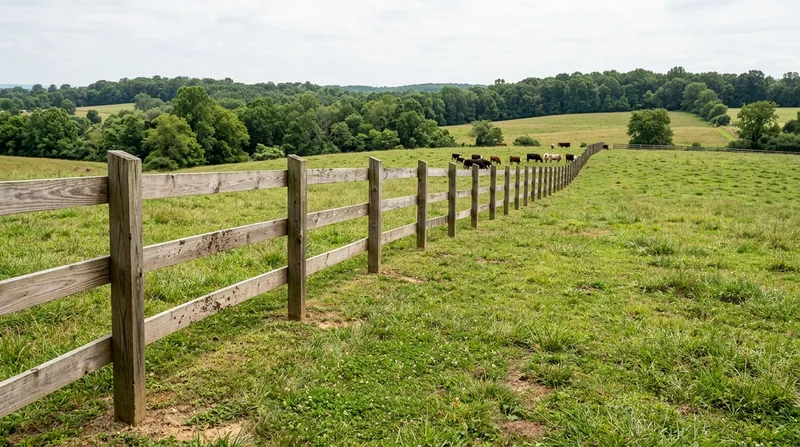




Farm fence installation in Baltimore requires posts set deep into the ground and materials built to last through seasons of weather and animal pressure. Whether you're fencing pasture in Towson, securing a horse property in Catonsville, or enclosing acreage in Glen Burnie, the work demands proper post depth, the right material for your animals and terrain, and crews who know how to set a straight line across rolling Piedmont ground. Baltimore Fence Company has installed and repaired ranch and farm fencing since 2012 across Greater Baltimore, from small residential horse lots to larger working properties. We work from your property line, set posts past frost depth in concrete, and run rail, wire, or pipe fencing that holds up to weather and use. Call (667) 213-5362 for a free estimate, or read on to learn how farm fencing works and what it costs in this market.
Why Farm and Ranch Fencing Matters in Baltimore
Open acreage and hobby farms dot the Baltimore region, and the fencing that holds animals and marks property lines takes real punishment. Wind rocks posts that are set shallow, horses test wire and rails, and freeze-thaw cycles work posts loose over time. Proper installation means setting posts deep enough to resist these forces, choosing materials that won't rot or corrode, and spacing them right so the fence doesn't sag or rack under load.
- Posts set in concrete below frost depth resist heave and settling.
- Rail or pipe fencing spreads load across the fence line instead of concentrating it at each post.
- Wire fencing for horses must be smooth and properly tensioned to prevent entanglement and injury.
- Galvanized or powder-coated hardware resists rust and extends the life of the entire structure.
- Proper spacing and racking (stepping the fence on slopes) prevents water pooling and maintains strength on uneven ground.
A well-built farm fence will hold for 15 to 25 years depending on material and maintenance, and the investment pays back in animal safety and property definition from day one.
Key info: Maryland requires that you call 811 before digging any post holes on your property. The free utility locate service marks underground gas, electric, water and communications lines so you don't hit them. It's the law, and it takes 2 to 3 business days. Plan your fence timeline around that requirement.
For more on how we handle similar structural work, see our fence post repair and replacement page.
How Farm and Ranch Fencing Installation Works in Baltimore
We start with a site walk to understand your property line, terrain, and what the fence needs to do. Then we mark the line, call 811 for utility locates, and set posts. The ground across Baltimore and Anne Arundel County varies, so we dig to a depth that clears frost action and sets the post in concrete for stability. From there, we run rail, wire, or pipe, tension it correctly, and finish with any gates or hardware you need.
- Meet on site to confirm property line, post spacing, and material choice.
- Request 811 utility locates and wait for clearance before digging.
- Dig post holes to proper depth and set posts in concrete.
- Install rails, wire, or pipe, checking for level and tension as we go.
- Add any gates, latches, or hardware and walk the fence with you.
Most farm and ranch fencing jobs run 1 to 3 weeks depending on property size, terrain, and material. We work in phases if the property is large, so you can see progress and adjust as needed.
Local example: A 5-acre horse property in Pikesville with a slope to the south required stepped installation (racked posts) on the downhill side to keep the fence level and strong. We set posts 8 feet apart on the slope and 6 feet on flat ground, ran smooth horse wire with anti-sag bracing, and added a self-closing gate at the barn entrance. The job took 2 weeks and the fence has held solid for over a decade.
See our gate installation and repair page for details on adding secure entry points to your property.
Farm and Ranch Fencing Methods and Materials
| Approach | Description | Best for |
|---|---|---|
| Split Rail Fence | Horizontal wooden rails (often cedar or pressure-treated pine) mortised into vertical posts, creating an open, classic look. | Decorative property borders, horse and small livestock containment, rural or rustic settings. |
| No-Climb Horse Fence | Smooth wire mesh attached to wooden or metal posts, preventing hooves and horns from catching, with proper tension and anti-sag bracing. | Horse and equine containment where safety from entanglement is critical. |
| Pipe Fence | Steel or galvanized pipe posts and rails, welded or bolted together, offering maximum strength and durability with minimal maintenance. | High-impact areas, large livestock (cattle, bulls), long-term installations where durability outweighs cost. |
| Barbed Wire Fence | Galvanized barbed wire strung between posts with tension bands and stretcher bars, held tight with proper gauge and spacing. | Cattle, sheep, and large livestock containment on working farms and ranches where cost efficiency matters. |
| Post and Board Fence | Solid wooden boards (pressure-treated or cedar) nailed horizontally to wooden posts, side-by-side or board-on-board, with cap and trim. | Mixed-use properties, horse and livestock containment where visibility and appearance matter equally. |
Each method has a place depending on your animals, budget, and how long you want the fence to stand. We'll walk through the pros and cons during your free estimate and help you choose the right fit for your property.
Farm and Ranch Fencing Cost in Baltimore: What to Expect
Farm and ranch fencing in Baltimore starts at $14 per linear foot for basic split rail or post-and-wire installations, and can run $25 to $50+ per foot for pipe fence, specialty materials, or complex terrain. The real cost depends on several factors: how far apart you space the posts (which depends on material strength and animal type), whether the ground is level or requires stepped installation on slopes, access for equipment, and whether you're building new or repairing and extending existing fence.
A typical 5-acre property with 800 linear feet of fencing might run $11,000 to $20,000 installed, depending on material and site conditions. A smaller 1-acre lot with 300 linear feet could cost $4,200 to $10,000. Getting 2 to 3 estimates is smart because terrain, soil, and your specific animal needs will vary from one property to the next.
Check our full pricing page for more detailed breakdowns by material and region, and call (667) 213-5362 for a free on-site estimate with no obligation to book.
Farm and Ranch Fencing Near Me: What Baltimore Homeowners Should Know Before Hiring
Choosing the right crew matters because farm fencing is a long-term investment and mistakes cost real money to fix. Before you call, know that Maryland regulates home improvement work, including fence installation, through the Maryland Home Improvement Commission (MHIC). Any contractor who takes money for fence work must hold an MHIC license and registration. Ask any contractor for their MHIC number, verify it with the Commission before work begins, and confirm with your city or county building department whether a permit is required. Fence height, setback, and material rules vary across Greater Baltimore, so local code matters.
- Request proof of general liability and workers' compensation insurance and ask for a certificate of insurance before work starts.
- Ask for references from farm and ranch fencing jobs in your area and follow up with at least two.
- Confirm the contractor will call 811 before digging and will work from your existing survey or the property line you identify.
- Get the estimate in writing with material type, post spacing, linear footage, and timeline clearly stated.
- Check whether your HOA or deed restrictions limit fence height, material, or color if you live in a master-planned community.
- Understand that Baltimore Fence Company is fully insured and can help document damage for insurance claims if weather impacts your fence.
We've been installing and repairing fences across Baltimore and the surrounding counties since 2012, and we're happy to answer questions about your specific property and budget. Contact us for a free estimate or call (667) 213-5362.
Farm & Ranch Fencing in Baltimore: Pricing Guide
| Service | Price | Details |
|---|---|---|
| Split Rail Fence Installation | Starting at $14/ft | Classic wooden rails and posts, open design, cost varies with wood species and post spacing on terrain |
| No-Climb Horse Fence | Starting at $18/ft | Smooth wire mesh on posts with anti-sag bracing, proper tensioning, and safety hardware for equine containment |
| Pipe Fence Installation | Starting at $28/ft | Galvanized steel posts and rails, welded or bolted, maximum strength for high-impact livestock and long-term durability |
| Barbed Wire Fence | Starting at $12/ft | Galvanized wire, tension bands and stretcher bars, cost-effective for cattle and sheep on working ranches |
| Post and Board Fence | Starting at $22/ft | Solid pressure-treated or cedar boards, side-by-side or board-on-board, appearance and containment combined |
| Large-Scale or Complex Installation | On estimate | Acreage over 10 acres, steep slopes requiring racked installation, or mixed materials need on-site evaluation |
Indicative pricing, the exact cost depends on square footage, finish, and site access. Free personalized estimate within 24h at (667) 213-5362.


