How Long Does a Wood Fence Last in Baltimore's Rowhouse Communities?
If you own a rowhouse in Highlandtown, South Baltimore, or Sowebo, you already know that outdoor space is precious. A sturdy fence defines your property line, creates privacy, and adds character to your home. But like any outdoor structure exposed to Baltimore's humid summers, salt air, and freeze-thaw winters, wood fences don't last forever.
The typical fence lifespan for a wood fence ranges from 15 to 20 years, though some well-maintained fences can stretch to 25 years or beyond. In the Mid-Atlantic climate where Baltimore sits, wood faces constant moisture challenges. Spring rains, summer humidity, and winter snow create conditions that accelerate rot, warping, and weathering. The specific lifespan of your fence depends heavily on the wood species used, the quality of installation, and how diligently you maintain it year after year.
Pressure-treated pine and spruce, the most common choices for Wood & Privacy Fence Installation, typically last 15 to 20 years. Cedar and redwood, which naturally resist rot, may extend to 20 to 25 years. However, even premium wood requires regular sealing, staining, and inspection to reach these upper ranges. Without proper care, even the best wood fence can fail in 10 to 12 years in Baltimore's challenging climate.
Signs You Need a New Fence: What Rowhouse Owners Should Watch For
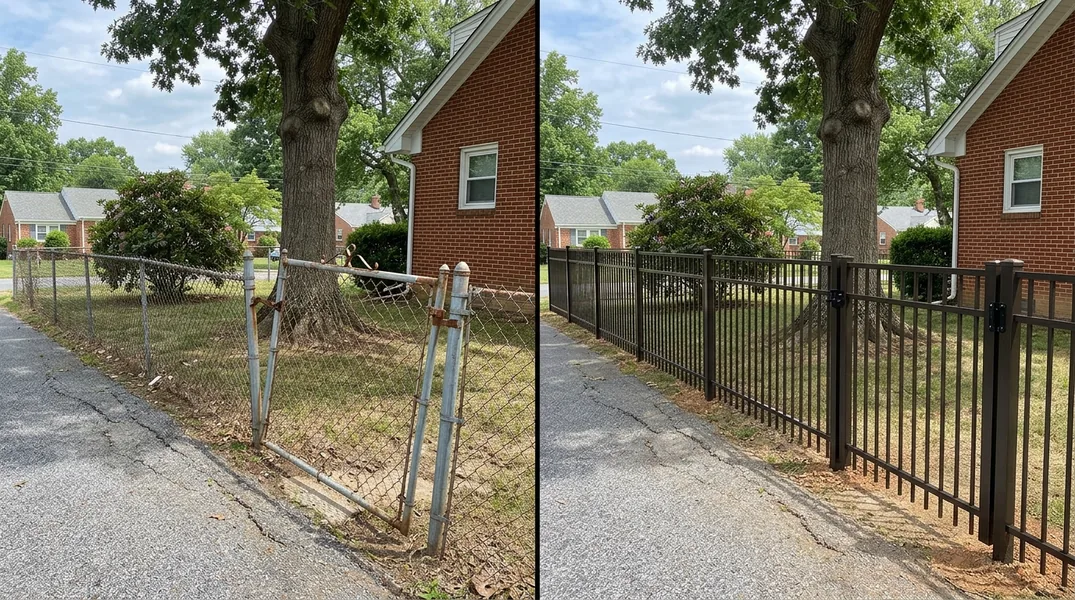
Rather than waiting for catastrophic failure, savvy homeowners watch for signs you need a new fence long before the structure becomes dangerous or unsightly. Early detection means you can plan for replacement on your timeline and budget, rather than facing an emergency situation that demands immediate action.
The most obvious warning sign is visible rot or decay. If you press a screwdriver or awl into a fence post or rail and it sinks in easily, the wood has begun to soften from moisture infiltration and fungal decay. This is especially common at ground level where posts contact soil and absorb water like a sponge. In rowhouse neighborhoods where fences often run between tight rows of homes, poor drainage and limited airflow accelerate this problem. Another red flag is leaning or shifting sections. If your fence is no longer vertical or if boards are pulling away from posts, the structural integrity is compromised. This can happen when posts rot at the base or when ground frost heaves push posts upward over winter.
Widespread splintering, cracking, and warping are also strong indicators that replacement time is near. When wood splits along the grain or cups and bows, it's responding to moisture cycling and sun exposure. While minor surface cracks are cosmetic, deep splits that run through the thickness of boards or posts suggest structural weakness. Additionally, if your fence requires constant repair, with boards needing replacement every season or posts needing reset after storms, the underlying structure is likely failing. When maintenance costs start approaching the pricing of a new fence, replacement becomes the smarter investment.
When to Replace a Fence: Timing Your Baltimore Installation
Deciding when to replace a fence involves both practical and financial considerations. Most experts recommend planning replacement when your fence reaches 15 to 18 years old, even if it still appears functional. At this age, wood has typically experienced enough weather cycles that failure is imminent. By planning ahead, you avoid emergency situations where a storm topples a weakened fence or a post suddenly gives way.
Spring and early fall are ideal times for fence replacement in Baltimore. Spring work allows you to enjoy your new fence throughout the summer and fall, while early fall installation gives you a fresh fence heading into the new year. Avoid winter installation if possible, as frozen ground makes digging post holes difficult and concrete setting times extend in cold weather. Summer can work, but the heat makes the work grueling for installers and may delay completion.
Another timing consideration is property changes. If you're planning to sell your rowhouse, a newer fence significantly boosts curb appeal and property value. Conversely, if you've just purchased a home with an aging fence, budgeting for replacement in your first year or two is wise. Don't let a failing fence become the buyer's problem or your surprise expense. If you're uncertain whether your fence is ready for replacement or simply needs maintenance, Baltimore Fence Company can provide a professional assessment. Call (667) 213-5362 or request a free estimate to discuss your specific situation.
Factors That Affect Fence Lifespan in Highlandtown, South Baltimore, and Sowebo
Several environmental and maintenance factors directly influence how long your wood fence will last. Understanding these can help you extend your fence's life or make informed decisions about replacement timing. The rowhouse neighborhoods of Baltimore present unique challenges that differ from suburban settings with larger lots and better air circulation.
Moisture is the primary enemy of wood fences. Rowhouse blocks often have narrow alleys and tight spacing between properties, limiting air flow and allowing moisture to linger. Fences in these areas dry more slowly after rain and may never fully dry during humid summers. Additionally, many rowhouse properties have poor drainage or slope toward the fence line, directing runoff directly at the base. Soil contact at posts accelerates rot, so fences where posts sit in standing water or muddy conditions fail much faster than those with proper grading and drainage.
Sun exposure also matters significantly. A fence that receives eight hours or more of direct sun ages differently than one in shade. UV rays break down wood fibers and fade stain and sealant, while shade slows weathering but can trap moisture. Most rowhouse fences experience mixed conditions, with some sections sunny and others shaded by neighboring homes or trees. This uneven aging means some boards may fail while others remain sound, leading to patchwork repairs that eventually become uneconomical.
Maintenance is perhaps the most controllable factor. Fences sealed and stained every two to three years last significantly longer than unfinished wood. Regular inspection catches small problems before they become major issues. Keeping gutters clean so water doesn't pour directly on fence lines, trimming vegetation away from the fence, and ensuring ground slopes away from posts all extend lifespan. Homeowners who invest in maintenance often add five to ten years to their fence's life, making regular upkeep a smart long-term strategy.
Wood & Privacy Fence Installation Near Me: Choosing Your Replacement
When your fence reaches the end of its lifespan, you'll need to decide whether to stick with Wood & Privacy Fence Installation or explore alternatives. Wood remains popular in Baltimore's rowhouse neighborhoods because it complements historic architecture and offers excellent privacy at competitive pricing. A new wood fence with proper installation and maintenance can serve you well for decades.
However, alternatives exist if you want lower maintenance. Vinyl & PVC Fence Installation requires no staining or sealing and resists rot and insect damage. Chain Link Fence Installation offers durability and transparency at lower cost, though it provides less privacy. Aluminum & Ornamental Iron Fencing adds elegance and lasts decades with minimal maintenance. Each option has trade-offs in appearance, cost, and upkeep.
If you're leaning toward wood because it matches your rowhouse's character and your neighbors' fences, that's a valid choice. Just commit to the maintenance routine that keeps wood fences healthy. If maintenance feels like too much, discuss alternatives with a professional installer. Baltimore Fence Company serves the entire Baltimore area and can help you evaluate options for your specific property. Contact us at (667) 213-5362 or request a free estimate today to discuss your fence replacement needs.
Planning Your Fence Replacement Budget
Understanding the pricing for fence replacement helps you budget appropriately and avoid sticker shock. Wood fence installation costs vary based on fence height, total linear feet, wood quality, and local labor rates. In Baltimore's rowhouse neighborhoods, most residential privacy fences range from four to six feet tall and run 50 to 200 linear feet, depending on lot size.
A basic pressure-treated wood privacy fence typically costs between $25 and $40 per linear foot installed, while cedar or redwood options run $35 to $60 per linear foot. These estimates include materials, labor, and basic site preparation. Additional costs may apply if old fence removal is needed, if your property requires extensive grading or drainage work, or if local permits are required. Some Baltimore neighborhoods have fence regulations, so it's worth checking before planning your project.
Rather than viewing fence replacement as a pure expense, consider it a home investment. A quality new fence enhances your property's appearance, increases privacy and security, and adds value when you eventually sell. Many homeowners find the improved enjoyment of their outdoor space worth the investment. To understand the specific pricing for your rowhouse property, reach out to Baltimore Fence Company at (667) 213-5362 or request a free estimate. We'll assess your property, discuss your preferences, and provide transparent pricing so you can make an informed decision.
Looking for a professional fence contractor in Baltimore? Baltimore Fence Company responds fast for all your fence needs.
Get a Free Quote